Local Processing

Favicon Generator

Favicon Generator creates favicon.ico, PNG favicons, Apple Touch Icon, Android Chrome icons, a site.webmanifest file, and copyable HTML tags from one local image.

Runs locallyNo uploadYour input is processed in your browser.

Favicon Generator

Create favicon.ico, PNG icons, Apple Touch Icon, Android icons, manifest, previews, HTML tags, and ZIP downloads locally.

What is this tool?

A favicon generator prepares the small website icons used in browser tabs, bookmarks, mobile shortcuts, and PWA install screens. A complete favicon pack avoids the common problem of only shipping favicon.ico while missing Apple Touch Icon, Android icons, or manifest metadata.

Supported input formats

  • PNG images
  • JPG and JPEG images
  • WebP images
  • SVG logos and icons
  • Square source artwork is recommended
  • Large files should be kept under 10 MB for smooth browser processing

Output files

  • favicon.ico
  • favicon-16x16.png
  • favicon-32x32.png
  • apple-touch-icon.png 180x180
  • android-chrome-192x192.png
  • android-chrome-512x512.png
  • site.webmanifest
  • lumatool-favicon-pack.zip

Size guide

  • 16x16: browser tab favicon.
  • 32x32: high-density browser favicon.
  • 180x180: Apple Touch Icon for iOS shortcuts.
  • 192x192: Android and PWA launcher icon.
  • 512x512: high-resolution PWA icon.
  • favicon.ico: legacy browser compatibility.

Input examples

  • Company logo PNG
  • Personal blog avatar
  • SaaS product mark
  • SVG logo
  • Transparent square icon

Output examples

  • favicon.ico
  • favicon-16x16.png
  • favicon-32x32.png
  • apple-touch-icon.png 180x180
  • android-chrome-192x192.png
  • android-chrome-512x512.png

Common use cases

  • Prepare a complete favicon pack before launching a website.
  • Replace inconsistent legacy favicon files with a modern set.
  • Create mobile shortcut and PWA icons from the same source artwork.
  • Generate HTML tags that match the exported filenames.
  • Preview how a transparent logo behaves on light and dark surfaces.

Best practices

  • Start from high-resolution square artwork when possible.
  • Keep the subject centered and avoid tiny text inside small icons.
  • Use transparent backgrounds only when the mark remains visible on light and dark surfaces.
  • Use consistent file paths between exported files and HTML code.
  • After replacing favicons, clear browser cache or change filenames if the old icon remains visible.

Common mistakes

  • Uploading a low-resolution source and expecting sharp large icons.
  • Using artwork that touches the edge and gets clipped after rounding or cover mode.
  • Shipping only favicon.ico and forgetting Apple Touch Icon or manifest icons.
  • Leaving HTML paths that do not match the files in the public folder.
  • Not previewing 16x16 and 32x32 outputs before release.

Privacy and local processing

Your file is processed locally in your browser and is not uploaded to LumaTool servers. Image decoding, canvas resizing, ICO packaging, ZIP creation, manifest generation, and HTML code generation all happen on the client side.
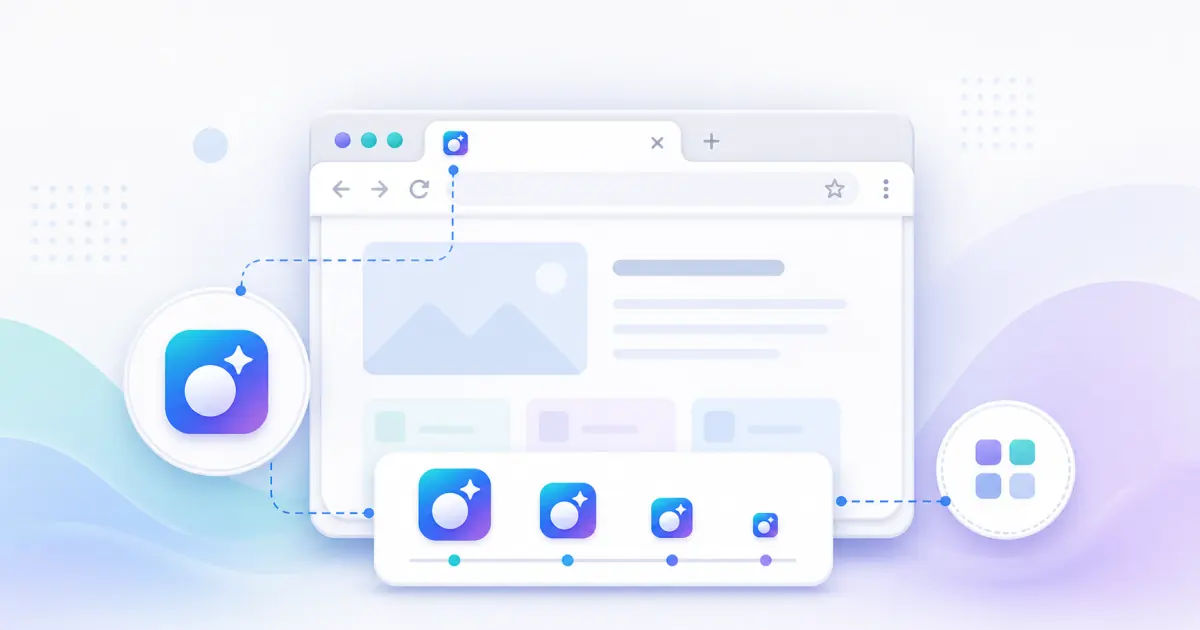
Examples

Input examples

Input example
Company logo PNG
Personal blog avatar
SaaS product mark
Output example
favicon.ico
favicon-16x16.png
favicon-32x32.png

Favicon Generator creates favicon.ico, PNG favicons, Apple Touch Icon, Android Chrome icons, a site.webmanifest file, and copyable HTML tags from one local image.

Output examples

Input example
one source icon image
Output example
favicon.ico
favicon-16x16.png
favicon-32x32.png
apple-touch-icon.png 180x180
android-chrome-192x192.png

Your file is processed locally in your browser and is not uploaded to LumaTool servers. Image decoding, canvas resizing, ICO packaging, ZIP creation, manifest generation, and HTML code generation all happen on the client side.

Privacy note

Your file is processed locally in your browser and is not uploaded to LumaTool servers. Image decoding, canvas resizing, ICO packaging, ZIP creation, manifest generation, and HTML code generation all happen on the client side.

How to use

  1. Step 1. Upload or enter the required icon paths.
  2. Step 2. Choose the output options that match your website, app, or PWA workflow.
  3. Step 3. Review the previews, generated files, manifest, or HTML code before downloading.
  4. Step 4. Download individual files, download the ZIP package, or copy the generated code.

Real-world examples

Prepare a complete favicon pack before launching a website

Prepare a complete favicon pack before launching a website.

Replace inconsistent legacy favicon files with a modern set

Replace inconsistent legacy favicon files with a modern set.

Create mobile shortcut and PWA icons from the same source artwork

Create mobile shortcut and PWA icons from the same source artwork.

Common use cases

  • Prepare a complete favicon pack before launching a website.
  • Replace inconsistent legacy favicon files with a modern set.
  • Create mobile shortcut and PWA icons from the same source artwork.
  • Generate HTML tags that match the exported filenames.
  • Preview how a transparent logo behaves on light and dark surfaces.

FAQ

What favicon size do I need?

Use 16x16 and 32x32 PNG for browser tabs, 180x180 for Apple Touch Icon, 192x192 and 512x512 for Android and PWA, plus favicon.ico for compatibility.

Do I need favicon.ico and PNG icons?

Yes, for broad compatibility. Modern browsers handle PNG well, while favicon.ico still helps older and legacy contexts.

Is my image uploaded to the server?

No. Processing runs locally in your browser and the file is not uploaded to LumaTool servers.

Can I use SVG as input?

Yes. SVG input is sanitized and rendered locally before PNG and ICO outputs are generated.

Where should I put favicon files?

Place them in your website public root or another static folder, then make sure the generated HTML paths match.

Why does my browser still show the old favicon?

Browsers cache favicons aggressively. Clear cache, use a private window, or change the filename and HTML path.

What is Favicon Generator best used for?

Favicon Generator is useful for focused icon tools tasks where you need a quick browser-based result without switching tools.

How is my input handled?

Your file is processed locally in your browser and is not uploaded to LumaTool servers. Image decoding, canvas resizing, ICO packaging, ZIP creation, manifest generation, and HTML code generation all happen on the client side.

Related tools